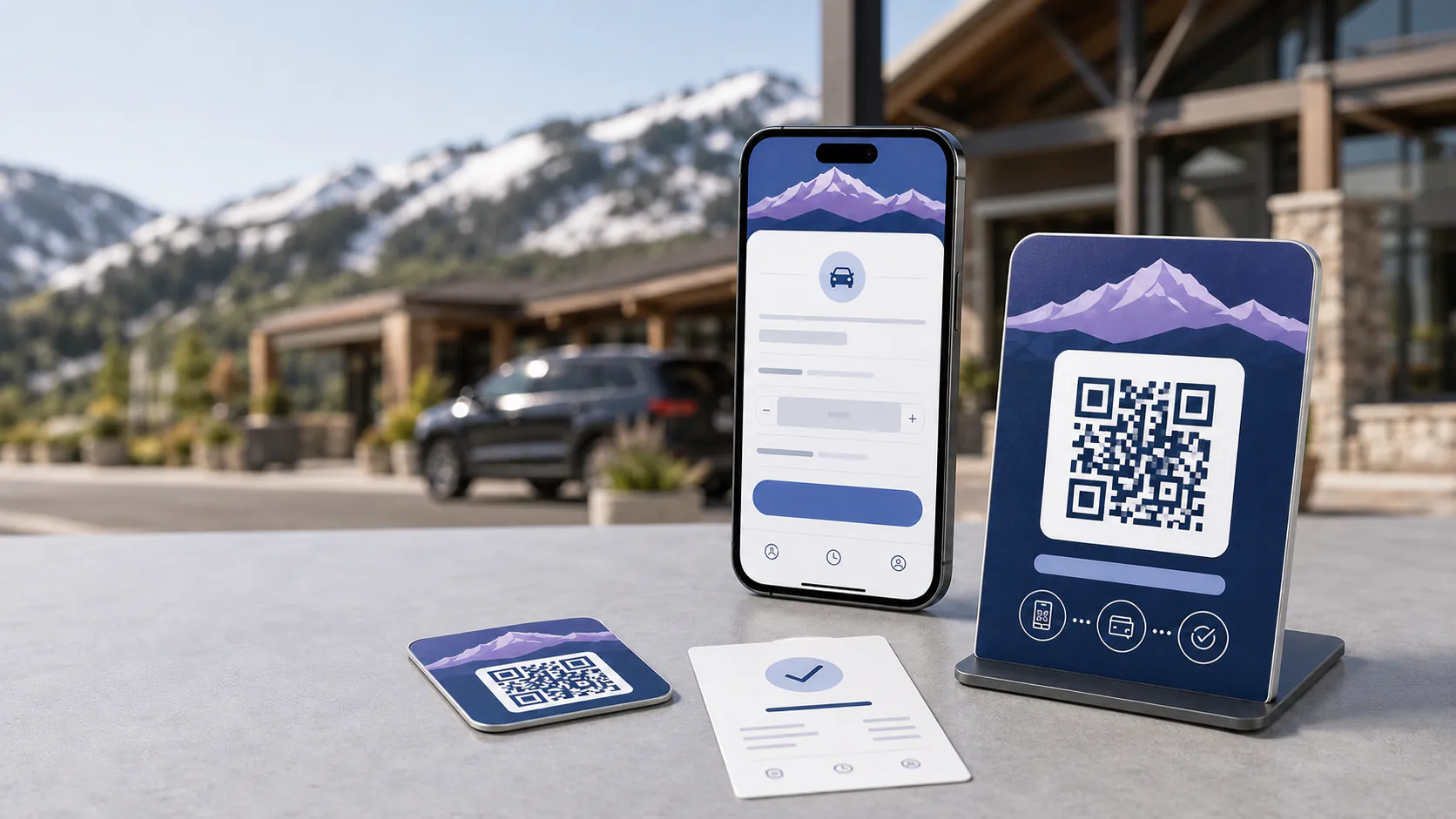
Clearer guest arrivals
Help guests find the right entrance and parking area.
Give guests a clearer arrival with planned routes, parking areas, printed signs, payment choices, staffing roles, and practical backup decisions.

Help guests find the right entrance and parking area.
Connect lots, signs, access groups, payments, and roles.
Carry useful operating lessons into the next event.
Give every parking area, sign, and operating role a clear purpose before guests arrive.
Map entrances, lots, walking routes, restrictions, and alternatives.
Plan assignments and priorities around attendance and timing.
Place printed direction signs along expected guest routes.
Assign areas for guests, staff, vendors, and reserved groups.
Compare prepaid, on-arrival, complimentary, or mixed parking.
Set decision owners and practical event-day backup plans.
Turn the venue and schedule into an event-day parking playbook.
Review the venue, schedule, attendance, groups, and parking supply.
Assign routes, parking areas, and key decision points.
Choose guest communication and the right payment approach.
Document roles, timing, contacts, and backup decisions.
Use team observations to improve the next event.
Consultation
We review access, timing, parking supply, guest groups, signs, payments, and roles.
Analytics & reporting
Available arrival, payment, lot, and team data can sharpen the next event plan.
Available information depends on the service mix and tools selected for the property.Arrival or departure peaks need clearer assignments and directions.
Guests, staff, vendors, and reserved groups need one plan.
The team wants each event to improve the next.
Which peaks, groups, and decision points shape demand?
How will guests receive parking and payment instructions?
Who owns each decision when conditions change?
Good to know
Clear answers before you make a parking decision.
The planning scope may include site review, parking-area assignments, arrival and departure routes, wayfinding, guest communication, payment choices, operating roles, contingencies, and a post-event review.
Begin early enough to review the venue, event schedule, attendance assumptions, guest groups, parking inventory, communication needs, and sign requirements before other event decisions become fixed.
Yes. A parking plan can assign areas for different guest or operating groups when the venue layout and event requirements support it. The instructions and on-site verification method should be defined in advance.
An organizer can compare prepaid, on-arrival, complimentary, or mixed parking based on the venue, guest journey, operating plan, and tools available for the event.
The planning process should identify practical alternatives, decision owners, communication steps, and updated wayfinding for likely changes. The options depend on the venue and confirmed parking resources.
After the event, review available arrival, payment, parking-area, issue, and team-observation information. That context can guide changes to signs, assignments, communication, and operating roles.
Tell us about the venue, schedule, parking areas, and guest arrival. We will help organize the routes, signs, payment approach, operating roles, and review plan.